



Features
Highway Noise Barriers: Your Complete Guide to Modern Noise Control Solutions

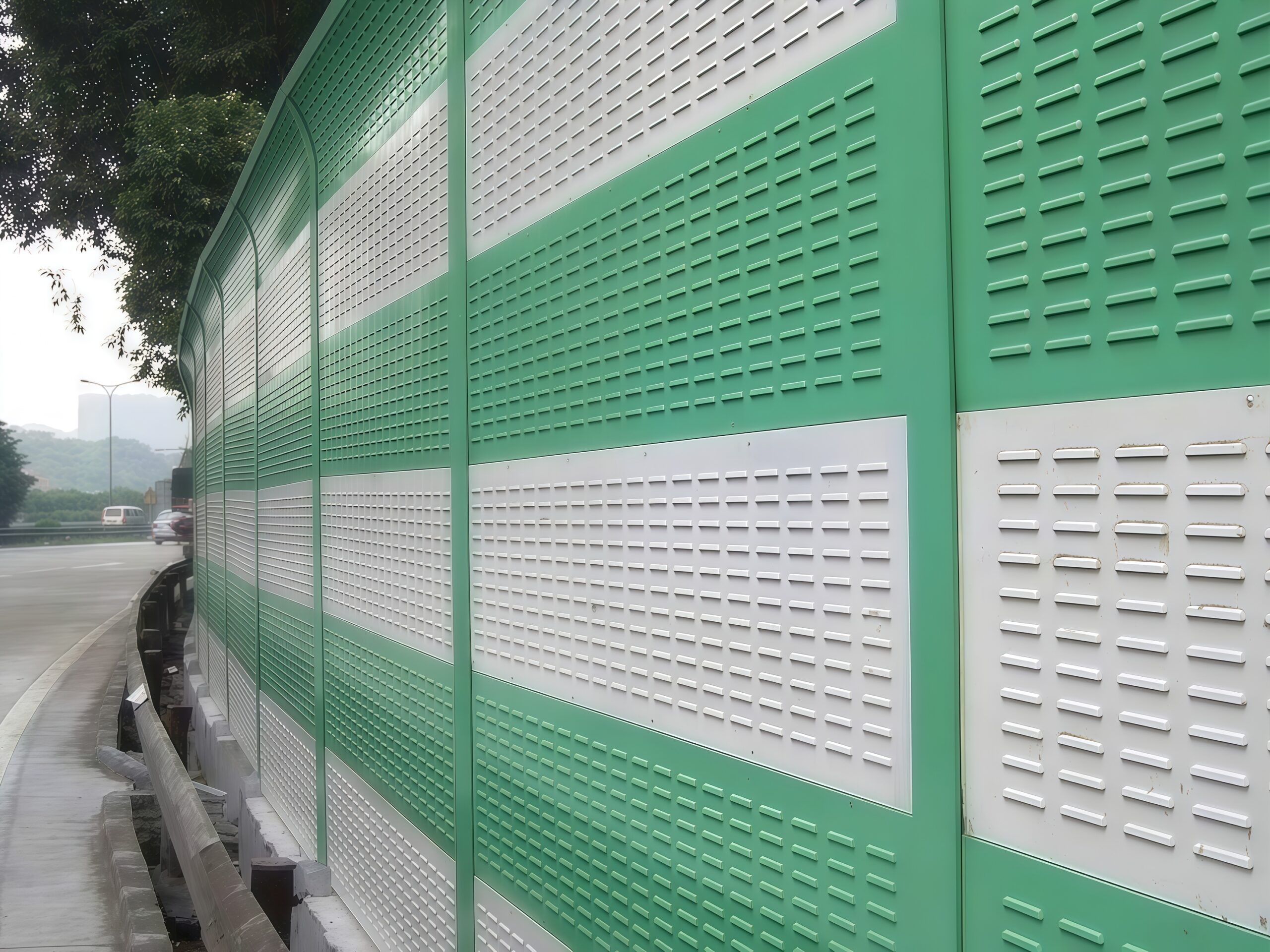
When you drive along a busy highway, you’ve likely noticed the tall, perforated walls lining the road. These are highway noise barriers (also known as sound barriers or noise walls), and they play a critical role in protecting nearby communities from traffic noise pollution. Today, we’ll dive into what they are, how they work, and why they’re essential infrastructure for modern cities.
What Is a Highway Noise Barrier?
A highway noise barrier is a solid, engineered structure built between a roadway and adjacent residential, commercial, or public spaces. Its primary purpose is to block, absorb, or reduce traffic noise before it reaches sensitive areas. The noise barrier in the photo is a typical example of modern design, combining perforated metal panels with a color-coated finish for both functionality and aesthetics.
These barriers are usually constructed from materials like galvanized steel, aluminum, or stainless steel, and are often treated with powder coating (like the green and white finish you see here) for durability, corrosion resistance, and visual appeal.
How Do Noise Barriers Work?
Noise barriers use three key principles to reduce traffic noise:
- Noise ReflectionSolid sections of the barrier reflect sound waves back toward the highway, preventing them from reaching the other side. The smooth, non-perforated parts of the panels in the photo act as reflective surfaces.
- Noise AbsorptionThe perforated sections (with louvers or holes) contain sound-absorbing materials inside the panels. As sound waves pass through the openings, they are trapped and converted into small amounts of heat, significantly reducing noise levels. This is why you see alternating perforated and solid sections in most noise barrier designs.
- Noise DiffractionThe height and shape of the barrier disrupt the path of sound waves, forcing them to travel upward and over the wall. This extra distance weakens the sound before it reaches the community. Curved or angled tops (like the ones in the photo) further enhance this effect.
Key Benefits of Highway Noise Barriers
- Improved Quality of Life: Reduces noise pollution by 5–20 decibels, making nearby homes, schools, and parks quieter and more livable.
- Environmental Protection: Helps protect wildlife habitats near highways by reducing noise stress on animals.
- Aesthetic Design: Modern barriers like the one in the photo are designed to blend with the environment, with customizable colors (like green) that match surrounding landscapes.
- Durability & Low Maintenance: Made from weather-resistant materials (galvanized steel, powder coating) that can withstand harsh conditions, including rain, snow, and UV rays, with minimal upkeep required.
- Safety: Also acts as a visual and physical barrier, reducing glare from headlights and preventing debris from leaving the roadway.
Common Applications
Beyond highways, noise barriers are used in a variety of settings:
- Elevated roads and urban light rail/subway lines
- Industrial zones and factories
- Residential areas near busy roads
- Airports and helipads
- Construction sites to contain noise during projects
Technical Specifications (Typical for Modern Barriers)
表格
| Parameter | Details |
|---|---|
| Materials | Galvanized steel, aluminum, stainless steel |
| Panel Thickness | 0.6mm–1.4mm (customizable) |
| Forming Thickness | 50mm, 80mm, 100mm, 140mm (customizable) |
| Hole Types | Louver holes, round holes, or custom patterns |
| Surface Treatment | Hot-dipped galvanized, powder coated (RAL colors available) |
| Noise Reduction | 25–40 dB sound reduction index, NRC 0.7–0.83 |
| Standard Sizes | 2500×500×80mm, 2500×500×100mm (custom sizes available) |
Why Choose a Modular Noise Barrier System?
The barrier in the photo uses a modular design, which offers several advantages:
- Easy Installation: Panels are prefabricated and can be quickly assembled on-site, minimizing construction time.
- Customizable: Heights, lengths, colors, and perforation patterns can be tailored to specific projects.
- Cost-Effective: Modular systems are more affordable than custom-built walls and can be easily expanded or modified if needed.
Final Thoughts
Highway noise barriers are more than just concrete or metal walls—they’re essential tools for balancing infrastructure development with quality of life. Modern designs, like the one shown, combine cutting-edge noise reduction technology with aesthetic appeal, proving that functional infrastructure can also be visually pleasing.
As cities continue to grow and traffic increases, noise barriers will remain a key solution for creating quieter, healthier communities.
Do you want me to adjust the tone (more technical / more casual) or expand on any specific section of this blog?