



News
Stainless Steel Woven Wire Mesh: The Versatile Industrial Workhorse

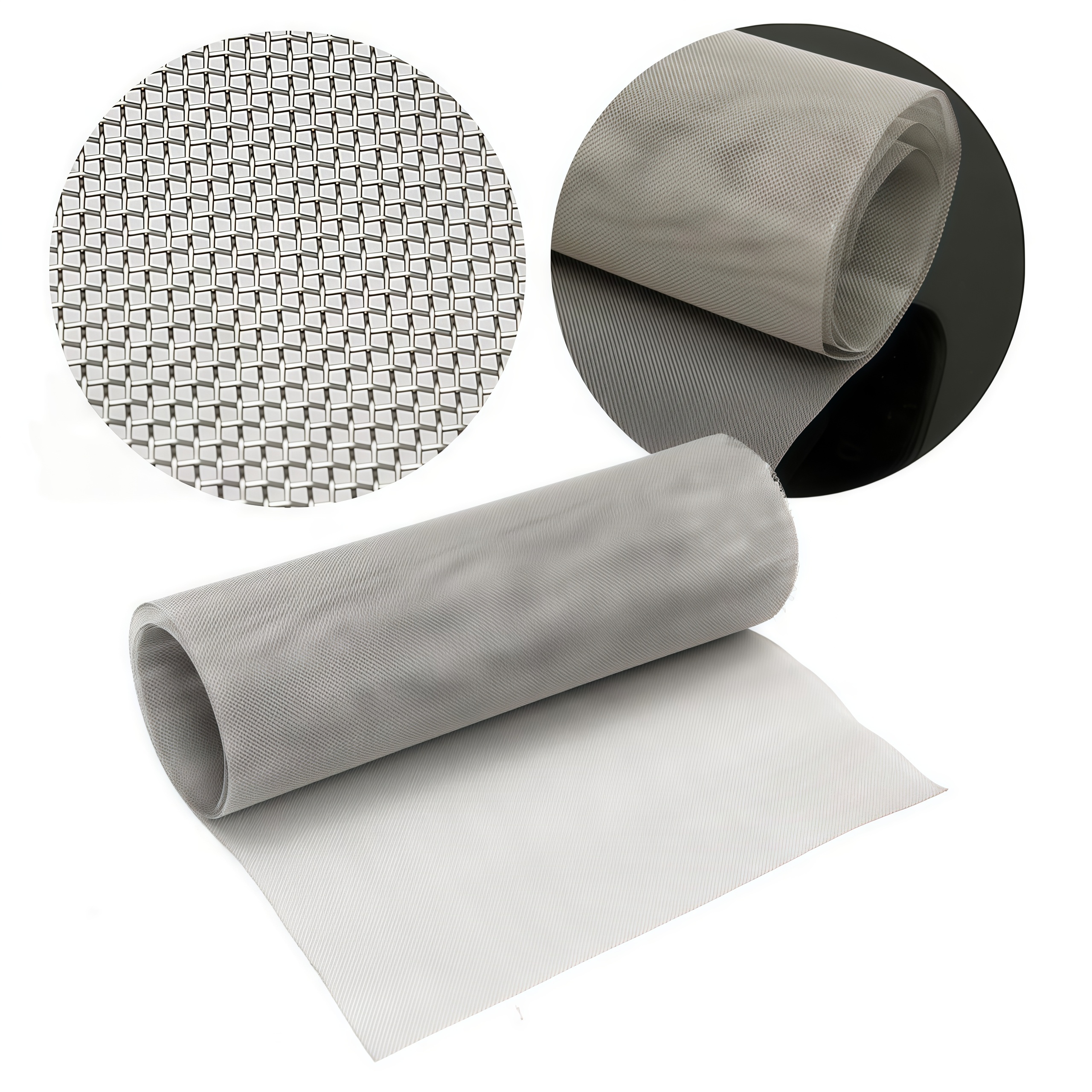
If you’re in need of a material that balances strength, precision, and corrosion resistance, look no further than stainless steel woven wire mesh. From industrial filtration to architectural design, this seemingly simple product is a foundational component across countless industries. Let’s dive into why it’s so widely used and what makes it stand out.
What Is Stainless Steel Woven Wire Mesh?
Stainless steel woven wire mesh is a precision-engineered material made by interlacing stainless steel wires into a uniform grid pattern. The weave style (plain, twill, Dutch, etc.) and wire diameter determine the mesh count, opening size, and strength. The image shows both a close-up of the grid pattern and a rolled sheet, illustrating its flexibility and uniformity.
Most commonly made from 304 or 316L stainless steel, it offers excellent resistance to rust, corrosion, and high temperatures, making it suitable for use in harsh environments.
Key Benefits of Stainless Steel Woven Wire Mesh
- Superior Corrosion Resistance: 304 and 316L stainless steel grades resist rust and chemical corrosion, making them ideal for use with water, acids, and other corrosive substances.
- High Tensile Strength: The interwoven structure gives the mesh exceptional durability, allowing it to withstand heavy loads, pressure, and repeated use without deforming.
- Precision Filtration & Separation: The consistent, uniform openings allow for accurate sieving, sorting, and filtering of solids, liquids, and gases.
- Heat & Temperature Resistance: Stainless steel maintains its strength and structure at high temperatures, making it suitable for use in furnaces, ovens, and other high-heat applications.
- Easy to Clean & Maintain: The smooth, non-porous surface is simple to clean and sterilize, making it a popular choice for food, pharmaceutical, and medical applications.
- Versatility: Available in a wide range of mesh counts, wire diameters, and weave styles, it can be customized for nearly any use case.
Common Applications
Stainless steel woven wire mesh is used in a diverse range of industries:
- Filtration & Separation: Water treatment, oil and gas processing, food and beverage production, pharmaceutical manufacturing.
- Sieving & Sorting: Mining, agriculture, chemical processing, and construction.
- Protection & Security: Window screens, safety barriers, animal enclosures, and pest control.
- Architectural & Design: Facades, decorative panels, and interior partitions.
- Industrial Use: Screen printing, battery components, and fuel cell technology.
Common Weave Styles
表格
| Weave Type | Description | Common Uses |
|---|---|---|
| Plain Weave | The most common style, with wires woven over and under alternately. | General filtration, sieving, and screening. |
| Twill Weave | A stronger weave where wires are woven over and under multiple times. | High-pressure filtration, fine particle separation. |
| Dutch Weave | Features different wire diameters in the warp and weft directions. | Ultra-fine filtration, often used in the chemical and petrochemical industries. |
Technical Specifications (Typical)
表格
| Parameter | Details |
|---|---|
| Materials | Stainless steel 304, 316, 316L, 304L |
| Mesh Count | 1×1 to 635×635 (customizable) |
| Wire Diameter | 0.02mm to 3mm (depending on mesh count) |
| Weave Styles | Plain, Twill, Dutch, Plain Dutch, Twill Dutch, Reverse Dutch |
| Width | 0.5m to 3m (customizable) |
| Length | 1m to 50m (customizable) |
| Surface Treatment | Plain (passivated), electropolished |
Final Thoughts
Stainless steel woven wire mesh is far more than just a screen—it’s a critical material that enables countless industrial processes. Its unique combination of strength, precision, and durability makes it the go-to choice for engineers and designers worldwide. Whether you’re filtering water, sieving grains, or building a decorative facade, there’s a stainless steel woven wire mesh that’s perfect for the job.